
Tyler Recklein, MSN, RN, VA-BC, Rebecca Bachik, BSN, RN, VA-BC, CNPI
ABSTRACT
Objective: To evaluate the accuracy and safety of intracavitary electrocardiography (IC-ECG) guidance for peripherally inserted central catheter (PICC) tip confirmation in pediatric inpatients by comparing IC-ECG findings with post-procedural chest radiograph interpretation.
Methods: A retrospective observational review was conducted of pediatric inpatient PICC insertions performed during the sampling period, in which IC-ECG technology was utilized. Of 43 patients requiring PICC insertion, 38 met inclusion criteria for IC-ECG use. Success and safety were defined as final catheter tip termination between the distal superior vena cava (SVC) and upper right atrium (RA). Intracavitary electrocardiography-identified tip location was compared with radiographic interpretation. Descriptive statistics were used to summarize accuracy, termination of location, and safety outcomes.
Results: Among the 38 eligible PICC insertions, IC-ECG guidance demonstrated an overall success rate of 95% (n = 36), defined by catheter tip termination within the distal SVC to upper RA. Optimal positioning at the SVC–RA junction was identified in 58% of cases. Additional acceptable tip locations included the distal SVC (21%) and upper RA (16%). Two insertions (5%) were identified as unsuccessful, with catheter tips terminating in the mid-SVC and upper SVC. No adverse events related to IC-ECG use were identified.
Conclusion: In this retrospective quality improvement evaluation, IC-ECG guidance for pediatric PICC tip confirmation demonstrated high accuracy and safe catheter tip placement when compared with post-procedural chest radiography. The majority of PICCs achieved optimal or acceptable tip positioning without evidence of harm. These findings support the feasibility of IC-ECG as a reliable, radiation-free alternative to routine radiographic confirmation in pediatric patients and provide justification for future practice change initiatives.
INTRODUCTION
University of Pittsburgh Medical Center (UPMC) Children’s Hospital of Pittsburgh is an academic pediatric medical center and the flagship children’s hospital of UPMC. Founded in 1890, the 315‑bed hospital provides comprehensive, family‑centered care, while supporting pediatric research and education. Serving children from the region and beyond, UPMC Children’s is recognized nationally for its commitment to high‑quality, specialized pediatric care.
Team Growth
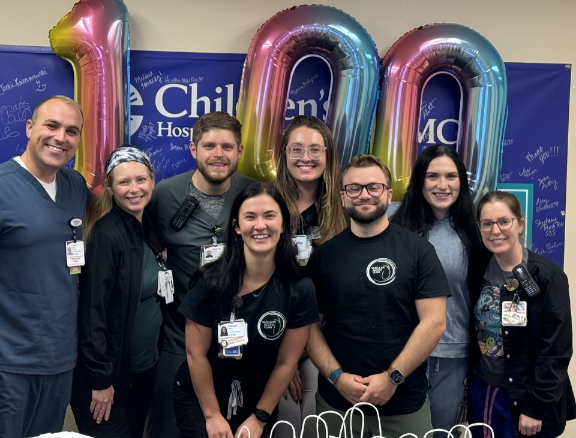
From 2023 to the present day, the Vascular Access Team (VAT) has undergone significant growth and transformation to meet the increasing demand for timely, reliable, and expert vascular access services. During this period, the team expanded from 16 to 21 members, now comprising 19 registered nurses and 2 patient care technicians. This expansion was supported by substantial organizational investment and a system‑wide recognition of the critical need for consistent, high‑quality vascular access care. In 2024, these efforts culminated in the implementation of 24‑hour coverage, ensuring round‑the‑clock availability of specialized services for pediatric patients across the hospital.
Concurrently, a comprehensive rebuild of the nurse‑led bedside peripherally inserted central catheter (PICC) placement program was initiated in late 2023. At that time, bedside PICC insertions were infrequent. Through focused training, skill development, and programmatic support, the team progressed to performing more than 200 bedside PICC insertions in 2025 and added lower extremity PICC insertion to their procedural capabilities. Alongside this increase in procedural volume, the team’s scope of practice, technical expertise, and clinical capabilities have expanded exponentially, reinforcing its role as a critical component of patient care delivery.
Training
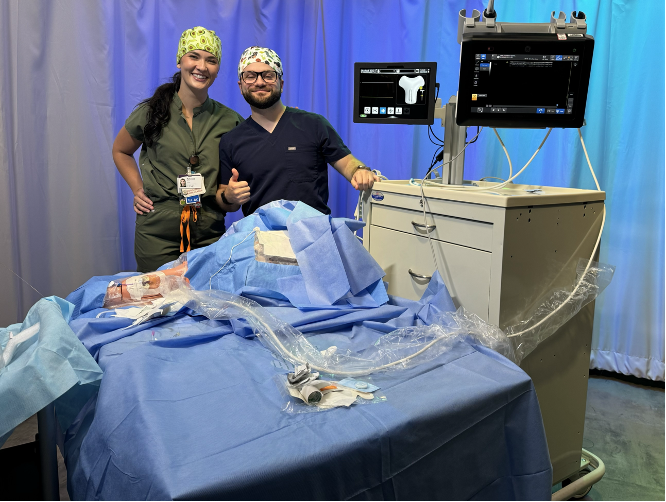
To support the redevelopment of bedside PICC insertion services, formal PICC insertion training was reintroduced in late 2023 and early 2024 with a small, highly motivated group of registered nurses on the VAT. Each nurse participated in structured didactic education through a formal partnership with an external vendor specializing in vascular access training. This foundational education is followed by a standardized, hands‑on tactile training process, allowing nurses to develop and refine insertion skills under guided supervision. The deliberate, phased approach to education emphasizes competency, safety, and consistency, ensuring that each clinician is adequately prepared before independently performing procedures. This training framework has been central to rebuilding the program and sustaining high standards of practice. With this rebuild and revamped training program came the evaluation of intracavitary electrocardiography (IC-ECG) confirmation as a clearance tool for PICCs placed by the VAT RNs.
CONCLUSION
UPMC Children’s Hospital of Pittsburgh’s Vascular Access Team has demonstrated remarkable growth, innovation, and commitment to excellence over the past several years. Through strategic team expansion, the implementation of 24-hour coverage, and the successful redevelopment of a nurse-led bedside PICC program, the team has significantly improved access to timely, high-quality vascular access care. Central to this program has been the reintroduction of a meticulous, competency-based training model that prioritizes safety, consistency, and clinical expertise. The evaluation and implementation of intracavitary electrocardiography guidance for PICC tip confirmation in pediatric patients further exemplifies the team’s dedication to evidence-based practice and high-quality vascular access care, reinforcing the team’s role as a vital contributor to innovation and patient-family centered care at UPMC Children’s Hospital.